The line runs along your boundary
DPIRD puts it in one sentence: deer hunting is regulated on public land only, and hunters may target deer on private land with the permission of the landholder or occupier. The rest follows from which side of the fence you stand on.
Your land
- No NSW Game Hunting Licence is needed to control feral deer.
- A landholder may give permission to someone who holds a firearms licence and has a suitable firearm and ammunition, or to a skilled bow hunter with a suitable bow and arrow.
- The private-land General Game Hunting Licence is still needed for anyone taking part in the Native Game Bird Management Program.
Public land
- Deer hunters hold a Restricted Game Hunting Licence and written permission issued by DPIRD.
- Every species, deer included, counts as a game animal for public land hunting by R-Licence holders.
- Deer must not be hunted at night on public land; the permission’s conditions 12 and 13 bar night hunting there with firearms or bows.
On dogs, DPIRD says R-Licence holders hunting deer on public land must follow restrictions on using them, and under its heading on dogs it says a person targeting deer may use a dog only to locate, point or flush deer.
DPIRD’s codes also note, as an example, that under the Biosecurity Regulation it is illegal to keep, move or release a feral deer.
What the regional plan says about deer here
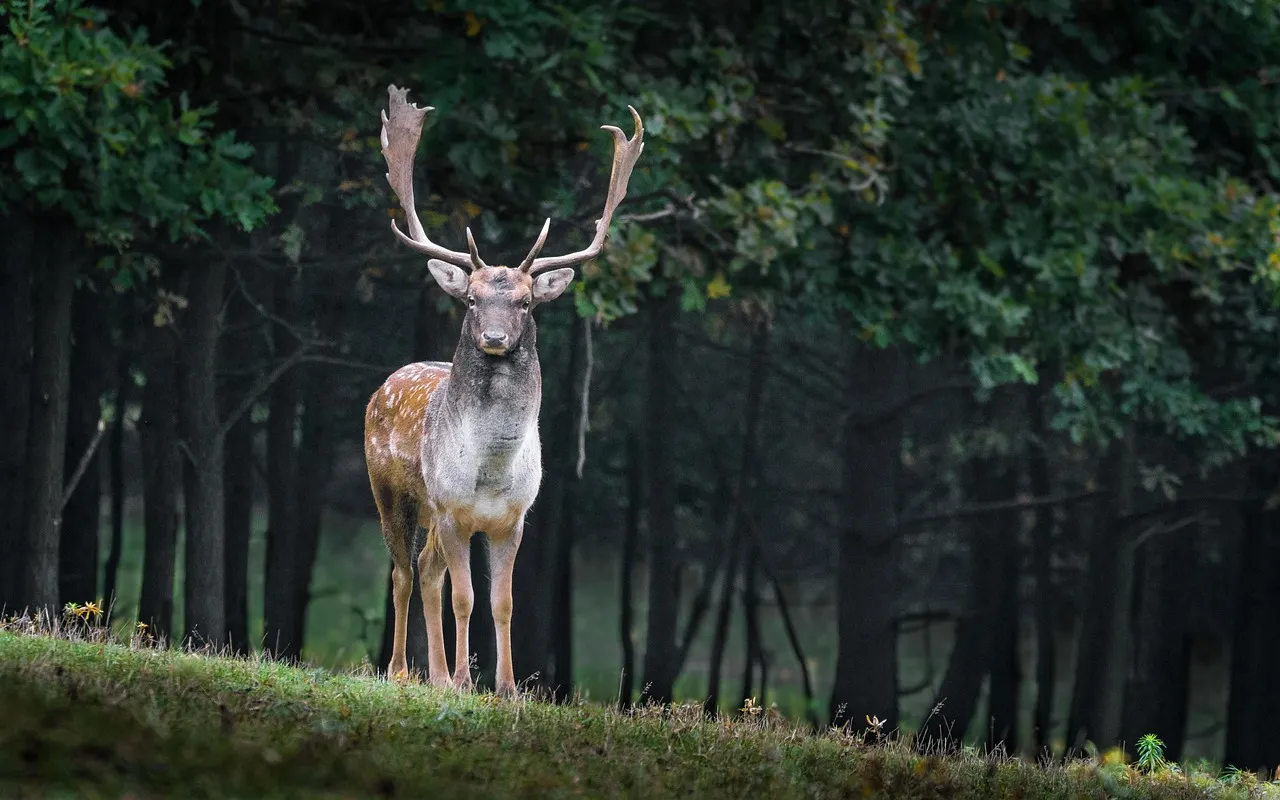
Six deer species have wild populations in NSW, and five of them are now widespread: fallow, red, sambar, chital and rusa deer. In Greater Sydney they are “moderately distributed”, the plan says, with the Hills named alongside the Central Coast, Hawkesbury, Penrith, Liverpool, Camden, Campbelltown, Wollondilly and Sutherland.
The plan calls them “a public nuisance where they affect amenity, damage gardens and cause motor vehicle and railway accidents”. The NSW Government’s page adds that feral deer grazing and trampling is a listed Key Threatening Process for NSW biodiversity.
The plan is candid about how hard control is here: “At least 35% of feral deer need to be removed from a local population each year to have ongoing reductions in impacts. Effective control in the region is often difficult and limited, due to ground shooting being the only practical control method and the peri-urban context which can limit the safe use of firearms.”
Without a program coordinated by Local Land Services, the plan says landholders can manage deer themselves with traps or firearms, or both, or engage a pest animal contractor directly. The NSW Government’s page recommends a coordinated group with your neighbours, because feral deer move quickly, avoid detection easily and do not respect boundaries.
The fence the plan describes
| Part | The plan’s figure |
|---|---|
| Height | At least 1.9 metres. |
| Mesh netting | 17/190/15. |
| Posts | No more than 10 metres apart. |
| An older fence | Electrifying its wires with standard energisers has been used successfully to change existing fences so they keep deer out. |
The reason is in the plan’s own words: “Deer are excellent jumpers”.
What DPIRD’s procedure asks
The control options for feral deer are ground and aerial shooting, and trapping. DPIRD’s standard operating procedure for trapping deer is guidance: it says it does not replace or override NSW legislation, and that traps must be used in line with the Prevention of Cruelty to Animals Act 1979. Among its points:
- Trapping takes a lot of time and labour, so it suits problem animals in urban and semi-urban areas better than large-scale control.
- Traps can cause real suffering and distress, so they should be used only where no suitable alternative exists.
- Traps should be checked twice a day in peak fawning periods and at least once a day the rest of the time.
- Smaller traps go where vegetation gives shade and shelter.
- A trapped deer is nervous and agitated, and its size and legs can seriously injure a person.
- Live deer and carcasses may carry diseases that affect people, Q-fever among them; wash your hands after handling any carcass.
The general rules for traps of every kind are in the notice on trapping and the cruelty law.
On the road and in the paddock
The NSW Government’s advice is to keep your distance: deer can become aggressive, so back away and report them. Driving past, slow down, because they are quick to jump onto the road. The page asks every land manager to report sightings on FeralScan, which helps show where deer are and where management should go first. For your own block, it points you to your local biosecurity officer for advice.
For the other pests on a block, see the notice on rabbits, calicivirus and pindone and the notice on the biosecurity duty.